Workforce Wednesday: You Cannot Pursue a Career You Do Not Understand
As June brings renewed attention to National Youth Employment Month, I have found myself thinking less about whether young people are working and more about whether they truly understand the industries we keep encouraging them to pursue.
That distinction has stayed with me because, over the years, I have realized many workforce conversations start several steps ahead of where people actually are. We often talk about labor shortages, career pathways, credentials, apprenticeships, and talent pipelines before people fully understand what the work looks like, why it matters, or where they might fit within it. Then we become frustrated when interest does not automatically convert into participation.
In reality, most people make career decisions based on what feels familiar, accessible, and understandable to them. If an industry feels distant, overly technical, or disconnected from someone’s lived experience, it becomes difficult for them to imagine themselves within it regardless of how strong the opportunity may actually be.
I see this often in industries connected to energy, construction, infrastructure, and technical trades. Public conversations around these sectors tend to focus heavily on workforce demand, but much less attention is given to how people are supposed to develop a real understanding of the work itself. Many young people still carry outdated perceptions of these industries or only recognize a small fraction of the careers that exist within them. Someone may hear “energy” and think only of utility poles or solar panels. Someone else may hear “construction” and picture one narrow version of the trades without understanding how technical, customer-facing, or technology-driven many of these careers have become.
At the same time, industries sometimes contribute to the disconnect without realizing it. We use language that makes sense internally but feels abstract to people outside the field. We describe workforce needs using terminology rooted in policy, operations, or industry structure while assuming people already understand the environment we are describing. In many cases, they do not.
I have sat in enough conversations with students, participants, contractors, and community partners to know that people are often trying to answer much more basic questions than the workforce system realizes. What does the day-to-day work actually look like? Is this stable work? Is this something someone like me can realistically do? What happens after the training? What does growth look like five years from now? Those are the questions that shape whether opportunity feels real.
Brookings has described the years between ages 14 and 24 as a “decisive decade,” a period where educational experiences, employment exposure, relationships, and life circumstances can heavily influence long-term outcomes.¹ That framing resonates because early exposure to work is rarely just about income. Those experiences often shape how young people interpret opportunity itself. They begin forming opinions about which industries feel accessible, which environments feel welcoming, and whether certain careers seem realistic for people from their communities or backgrounds.
The labor market data reinforces why these conversations matter. The U.S. Bureau of Labor Statistics reported that 53.1 percent of youth ages 16 to 24 were employed in July 2025 while also noting that nearly 2 million young people entered the labor force between April and July as summer employment increased.² Young people are actively looking for exposure, experience, and direction. The question is whether the opportunities available to them are helping build a deeper understanding of how industries function or simply offering temporary employment without broader context.
I do not say that to diminish the value of summer jobs or entry-level work. Some of the most important lessons people learn early come from responsibility, consistency, communication, teamwork, and learning how to navigate a workplace environment. But I also think we sometimes underestimate how important interpretation is during those experiences. A young person may complete a summer job and still walk away without a clearer understanding of how industries connect, where advancement exists, or how skills learned in one environment transfer into another.
That is one reason I believe exposure has to become more intentional. A single career fair, flyer, or presentation rarely changes how someone sees an industry. Real understanding usually develops through repeated interactions, honest conversations, mentorship, work-based learning, and opportunities to hear directly from people already working in the field. In my experience, industries become more accessible once someone takes the time to explain not only what the work is, but how the work connects to real life, long-term stability, and personal growth.
I have been thinking about this quite a bit as Walker-Miller prepares to support workforce training opportunities with graduating seniors in Detroit and Flint through partnerships with DTE and Consumers Energy. These are young people, many between the ages of 17 and 18, who may not be planning to pursue what is traditionally viewed as the standard four-year college route. Through Building Performance Institute credentialing and exposure to careers connected to energy efficiency and building performance, the opportunity is not simply about introducing students to technical concepts. It is about helping them better understand an industry they may not have previously seen clearly and helping them recognize that there are multiple ways to build a meaningful career, and ultimately career placement upon program graduation.
What I appreciate about efforts like this is that they create room for conversation alongside training. Students are not only learning technical information. They are gaining exposure to professionals, industries, terminology, expectations, and career possibilities that may have previously felt unfamiliar or inaccessible. In many cases, that level of understanding becomes just as important as the credential itself.
This is especially relevant as industries continue evolving faster than public perception evolves alongside them. Energy work today intersects with technology, electrification, healthy homes, customer engagement, resilience, sustainability, and data-informed decision-making in ways many people outside the field do not fully recognize. Manufacturing environments continue becoming more advanced. Technical trades increasingly require adaptability, communication, and digital fluency alongside hands-on skill. Yet public understanding of these industries often remains years behind where the industries themselves already are.
That gap creates challenges not only for employers, but for communities trying to understand where future opportunity exists.
The Michigan Department of Labor and Economic Opportunity recently launched additional resources focused on helping young workers better understand workplace safety, labor rights, work permits, and early employment expectations.³ The U.S. Department of Labor’s Workforce Pathways for Youth initiative similarly emphasizes career exploration, job readiness, apprenticeships, work-based learning, and broader exposure to career opportunities.⁴ What stands out to me in both efforts is the recognition that workforce readiness develops over time through information, relationships, exposure, and practical experience. It is rarely built through one moment alone.
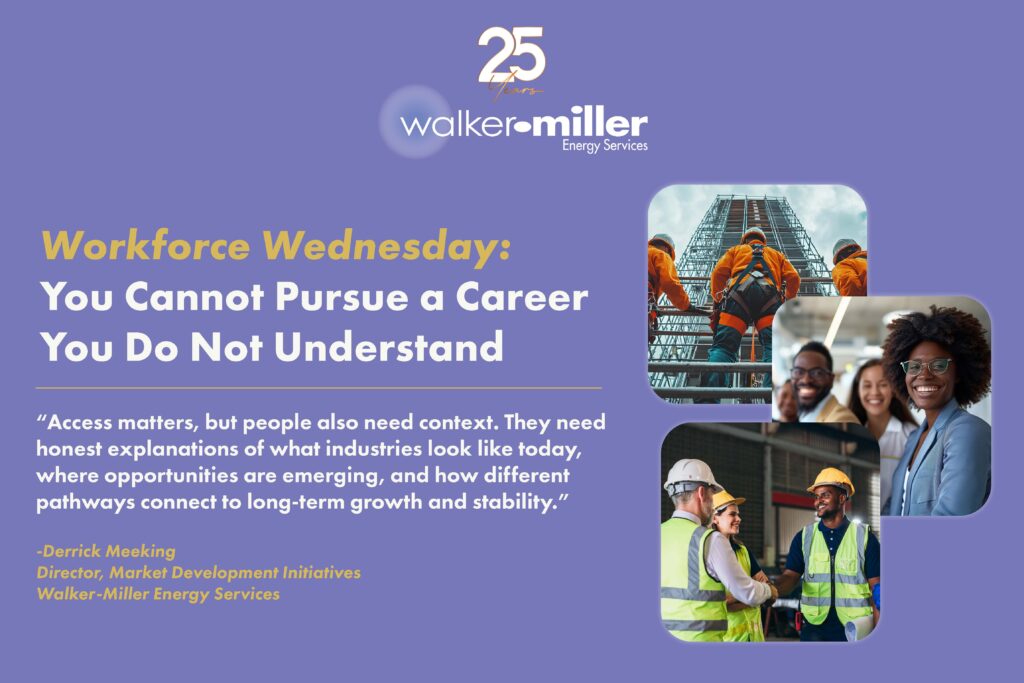
As conversations around youth employment continue throughout June, I hope we spend as much time discussing career understanding as we do career access. Access matters, but people also need context. They need honest explanations of what industries look like today, where opportunities are emerging, and how different pathways connect to long-term growth and stability.
At its best, this work is not simply about helping people find jobs. It is about helping people better understand the changing world of work so they can make informed decisions about where they see themselves within it.
Because people cannot realistically pursue careers they do not fully understand.
And if industries genuinely need the next generation of talent, then helping people understand the work has to become part of the work itself.
Market Signals & References
¹ Brookings Institution. The Decisive Decade: Understanding the Trajectories of 14- to 24-Year-Olds.
² U.S. Bureau of Labor Statistics. Employment and Unemployment Among Youth, Summer 2025.