Workforce Wednesday
Workforce Development Is Built Through Systems, Not Programs
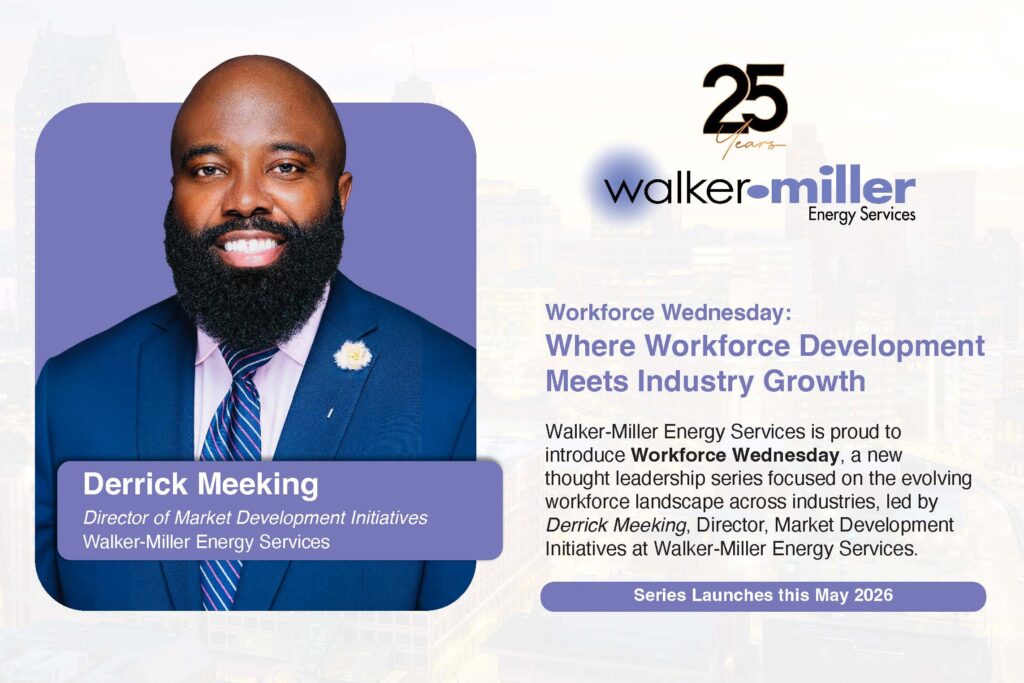
In the first article of this series, I wrote about why workforce development has moved to the center of the conversation across industries. The next question is just as important: how do we actually build the workforce those industries need?
Too often, the answer is framed around launching another program. A new training program. A new initiative. A new recruitment effort. A new pathway. Those things can absolutely have value, and many of them do. Programs are often the most visible expression of workforce development, and in many cases they are the vehicle through which people first gain access to opportunity. But one of the lessons I have learned from doing this work is that programs by themselves do not create a durable workforce ecosystem. They can open a door, but they do not necessarily create a pathway people can move through with clarity or confidence.
That distinction matters because workforce development is often discussed as if the challenge is simply to create more points of entry. In reality, the challenge is much broader. It is about whether the systems surrounding those entry points are aligned well enough to turn interest into readiness, readiness into placement, and placement into long-term opportunity. That takes more than a standalone program. It takes coordination between employers, training providers, community organizations, public workforce systems, educators, and industry leaders who understand that their work is connected whether they operate that way or not.
That is why I believe workforce development is built through systems, not programs.
A program can provide exposure, training, coaching, or credential attainment. A system determines whether any of that translates into something lasting. It shapes whether employers trust the talent coming out of the pipeline. It influences whether training reflects the realities of the labor market. It affects whether people entering a new field can navigate the practical barriers that often decide whether they persist or fall off. It also determines whether there is any real connection between what a region says it needs and what its workforce efforts are actually designed to deliver.
When those pieces are disconnected, the outcomes are usually familiar. Individuals complete training and still do not know what comes next. Employers say they support workforce development but remain hesitant to hire because they are not convinced candidates are truly ready. Community-based organizations do the work of trust-building and participant support, but their role is too often treated as secondary instead of essential. Workforce boards, educational institutions, and industry partners may all be active, but not necessarily aligned. The result is movement without enough continuity. A lot of effort goes in, but the pathway still feels fragmented to the people trying to use it.
This is not just a local observation. It is increasingly reflected in how national workforce policy is being framed. In January 2026, the U.S. Departments of Labor and Education issued updated guidance for Workforce Innovation and Opportunity Act State Plans and explicitly emphasized stronger alignment between education and workforce systems, employer-defined skill needs, Registered Apprenticeship, and other work-based learning models.¹ That matters because it reinforces a simple but important point: workforce development works better when systems are built around actual labor market demand rather than around disconnected activity.
The same is true when we look at apprenticeship. In March 2026, the U.S. Department of Labor issued guidance intended to accelerate Registered Apprenticeship growth, reduce administrative burdens, and improve transparency in the registration process. In April, the Department announced $85 million in grant funding to support apprenticeship expansion and modernization across states and territories.² Those are not minor technical updates. They are signals that workforce systems are being pushed toward stronger employer alignment, clearer pathways, and more scalable models of talent development.
What I appreciate about those signals is that they reflect what many practitioners have already experienced. Workforce development is not strongest when it is treated as a set of isolated interventions. It is strongest when the connections are intentional. Employers help define the skills that matter. Training providers design around those expectations. Community organizations support access, trust, and persistence. Public systems help create infrastructure and alignment. Industry intermediaries help translate market need into strategy. That is when workforce development starts to look less like a program portfolio and more like an ecosystem with direction.
I also think this matters because we are still too quick to confuse activity with progress. A market can have job demand, training programs, and recruitment campaigns and still have a weak workforce system. Brookings recently described part of today’s labor market challenge as a “conversion problem,” meaning too many potential matches between workers and firms never become stable employment relationships.³ That framing is useful because it forces a more honest question. We should not only ask whether people are being reached or trained. We should ask whether systems are designed to carry them from exposure to employment in a way that is credible for employers and navigable for workers.
That is where systems thinking becomes essential. It changes the measure of success. It pushes us beyond enrollment numbers and completion rates as the only proof points that matter. It makes room for harder questions about placement, retention, advancement, and whether the people entering these pathways can actually build careers from them. It also challenges us to stop treating support services as peripheral when they are often central to whether someone can stay engaged long enough to benefit from the opportunity in front of them.
From where I sit, that is one of the most important conversations in workforce development right now. We do not just need more programs. In many cases, we need stronger architecture around the programs we already have. We need clearer employer involvement on the front end, not only at the hiring stage. We need better signaling around what readiness looks like in the labor market. We need stronger connections between training, work-based learning, and actual jobs. We need community-facing organizations to be treated as part of workforce strategy, not as an add-on to it. And we need more honesty about whether the systems we have built are easy for insiders to understand but difficult for first-time participants to navigate.
This is especially important in sectors where talent demand is not slowing down. The Department of Energy continues to frame workforce as a central condition for the energy transition, emphasizing job creation, job quality, and job access.⁴
That is why this conversation matters so much to me. Workforce development should not be judged only by how many initiatives we can launch. It should be judged by whether the overall system makes opportunity more reachable, more coherent, and more durable for the people and employers who depend on it. Programs will always matter. They are often where innovation starts and where relationships are first built. But if we want lasting results, we have to pay just as much attention to the infrastructure around them.
Because in the end, the goal is not to create activity around workforce.
The goal is to build systems people can move through and employers can rely on.
Market Signals & References
¹ U.S. Department of Labor and U.S. Department of Education. Guidance on Workforce Innovation and Opportunity Act (WIOA) State Plan Modifications for Program Years 2026–2027.
https://www.dol.gov/newsroom/releases/eta/eta20260126
² U.S. Department of Labor. Registered Apprenticeship Program Guidance and Apprenticeship Expansion Grants Announcement (2026).
https://www.dol.gov/newsroom/releases/eta
³ Brookings Institution. “Missing Jobs Are a Conversion Problem.”
https://www.brookings.edu/articles/missing-jobs-are-a-conversion-problem/
⁴ U.S. Department of Energy. Energy Workforce Development Initiatives and Strategy for a 21st Century Energy Workforce.
https://www.energy.gov/topics/energy-workforce
Derrick Meeking is Director of Market Development Initiatives at Walker – Miller Energy Services. Workforce Wednesday is a recurring column reflecting on workforce development, industry trends, and the evolving talent needs across sectors